Dry Mouth (Xerostomia): Causes & Treatment
Why your mouth is dry, at night or all day, and how to fix it.
Dry mouth (xerostomia) means saliva flow has dropped below what your mouth needs to stay comfortable and protected — and saliva does more than add moisture: it buffers acid, delivers minerals that re-harden enamel, and keeps bacteria in check. Medications are the single most common cause of chronic dry mouth, followed by mouth breathing, dehydration, and certain medical conditions. Occasional dryness — thirst, a stuffy nose — is normal; dryness most of the day, every day, is worth addressing, since it measurably raises your risk of cavities and gum irritation over time.
The guides below cover nighttime dry mouth specifically, the most common underlying causes, and what actually helps beyond sipping water — including when it is worth a conversation with your prescriber or dentist.
See a dentist if
- Dryness has lasted more than a couple of weeks with no obvious cause
- You're noticing new cavities, sore gums, or cracked lips alongside the dryness
- It started after beginning a new medication

How to Fix Dry Mouth: What Actually Helps Long-Term

Why Is My Mouth So Dry at Night? Causes and Fixes
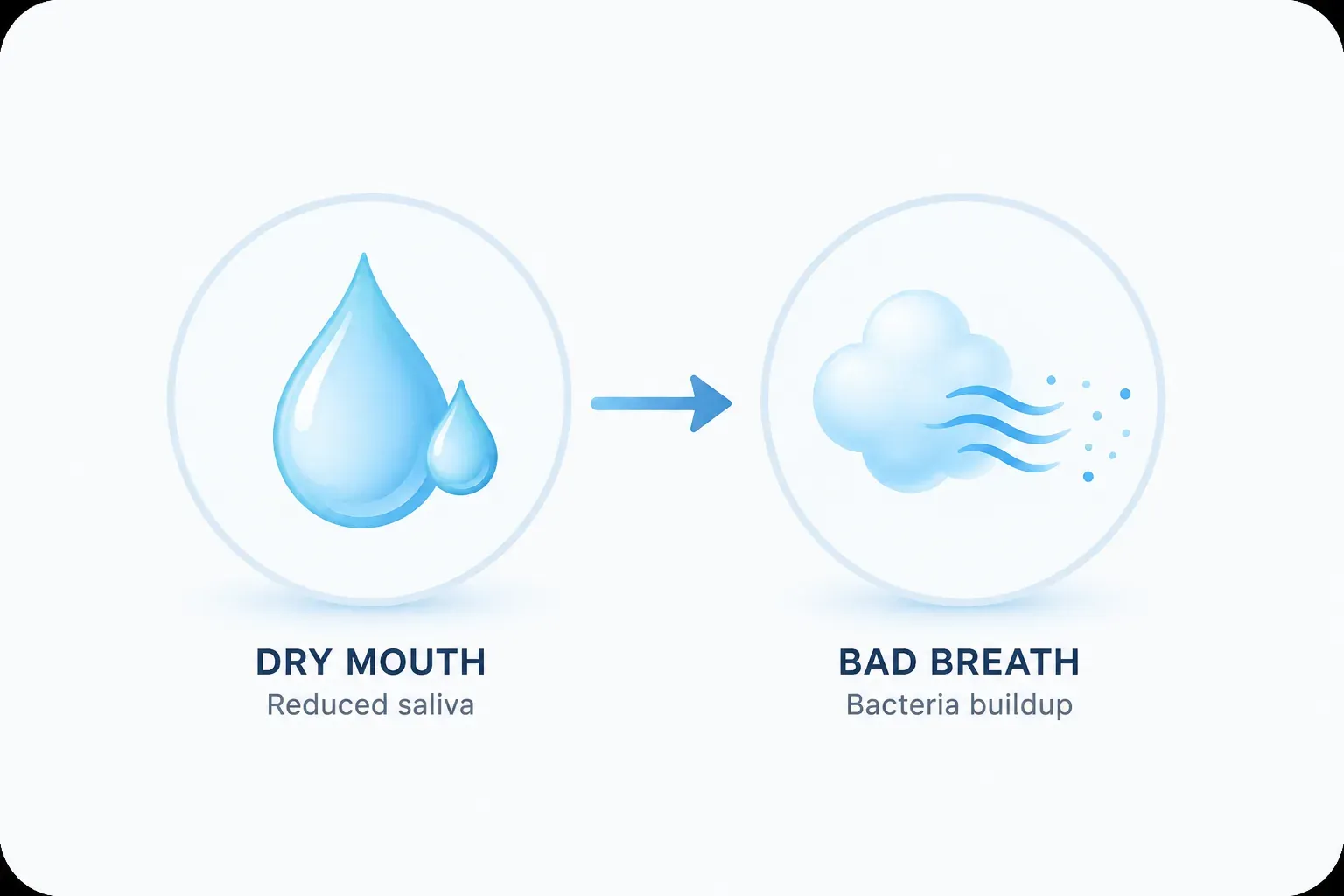
Dry Mouth and Bad Breath: Why They Almost Always Come Together
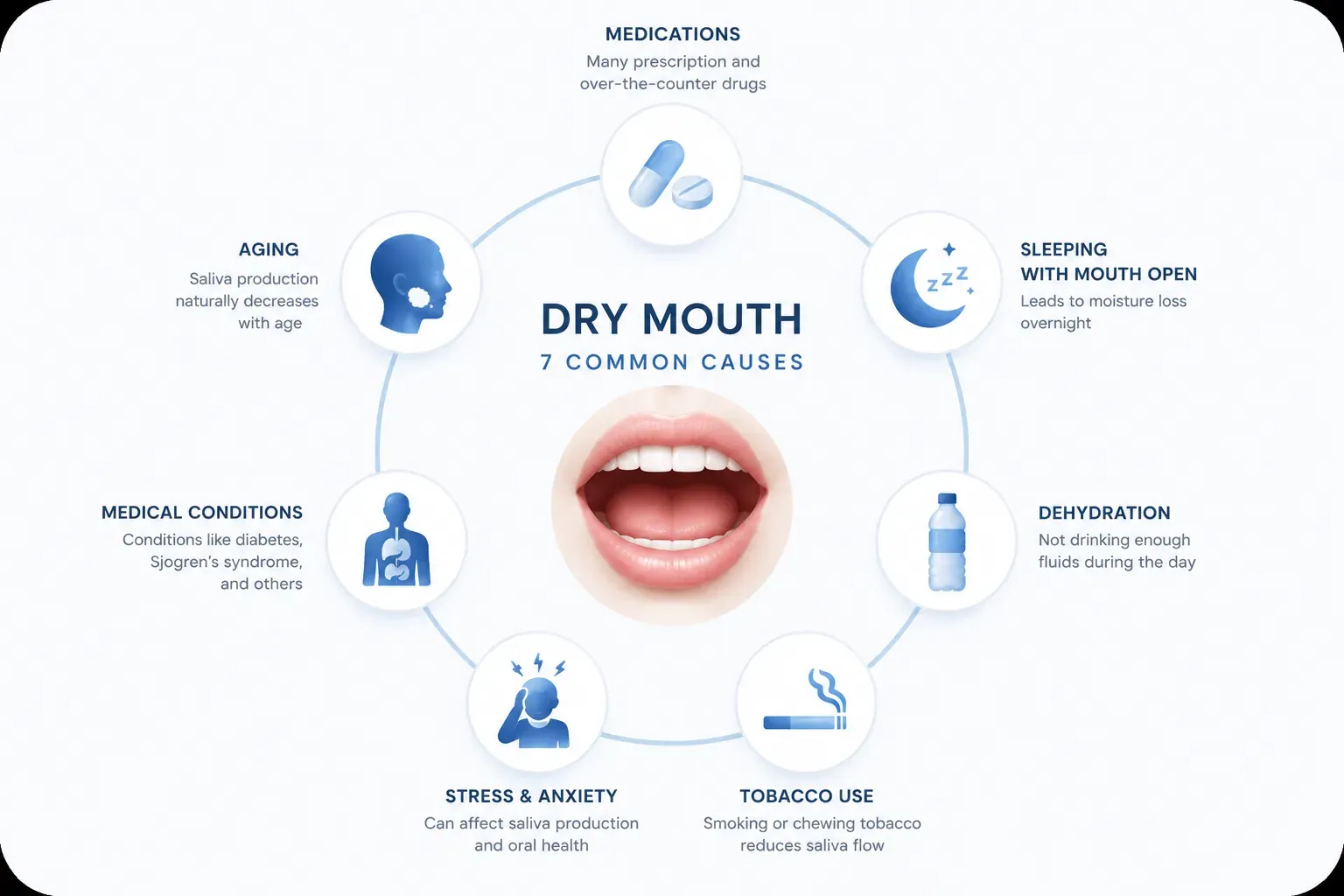
Dry Mouth Causes: 7 Reasons Your Mouth Won't Stop Feeling Dry
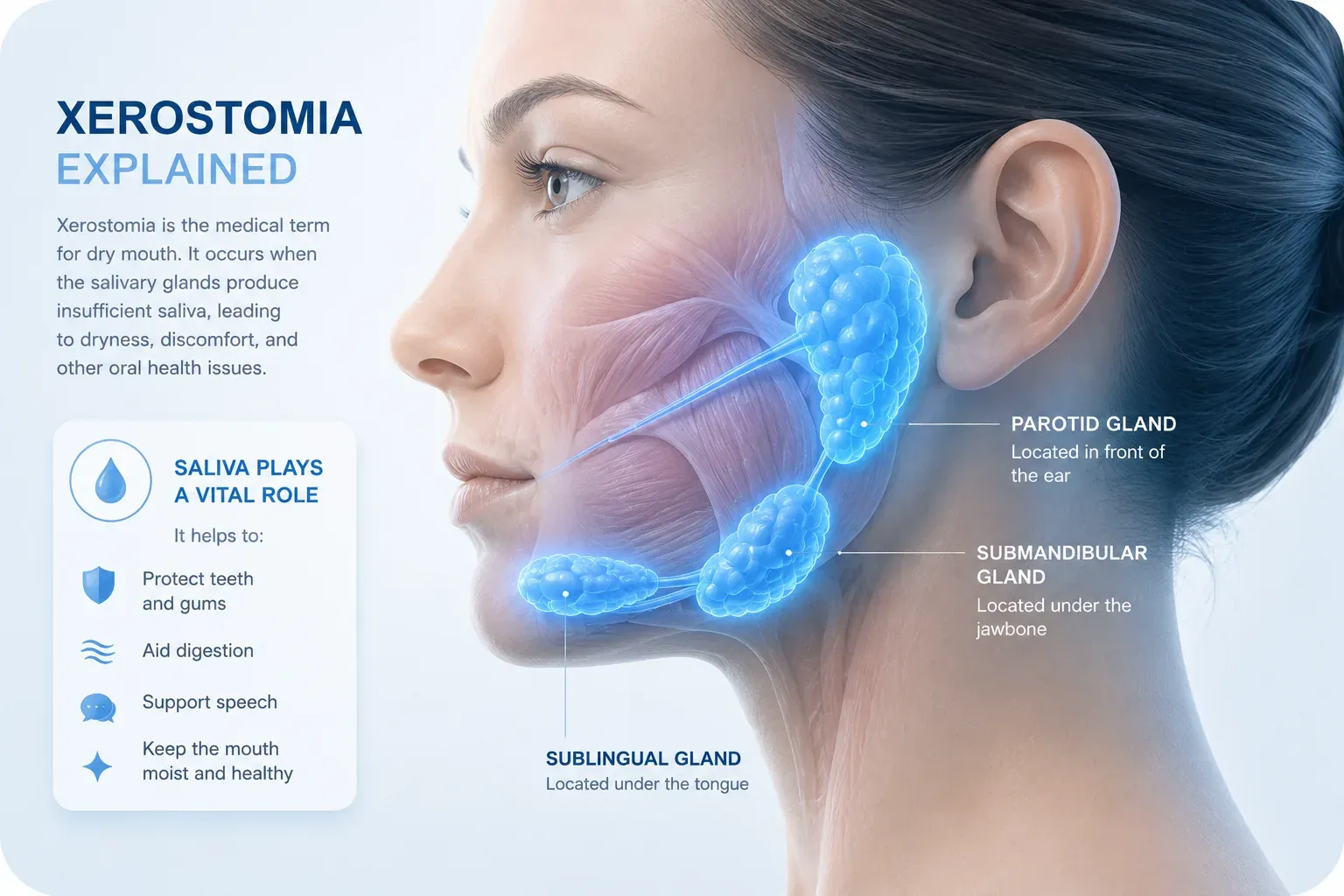
Xerostomia Explained: The Medical Causes Behind Chronic Dry Mouth