Bad Breath (Halitosis): Root Causes & Real Fixes
Why bad breath happens even after brushing, and how to fix it for good.
Persistent bad breath that survives brushing, mouthwash, and mints is rarely a hygiene failure — it's almost always volatile sulfur compounds produced by bacteria living on the back of the tongue, in gum pockets, or, less often, coming from the sinuses or gut. Morning breath and occasional garlic breath are normal and self-limiting; breath that doesn't clear within about an hour of your normal routine, or that returns within minutes of freshening up, points to a bacterial source that mints can mask but not fix. Identifying where the odor is actually coming from matters more than trying another mouthwash.
The guides below walk through specific patterns — morning breath, breath that persists after brushing, a white-coated tongue — and what each one usually means, along with when it is worth ruling out gum disease, dry mouth, or a digestive cause with your dentist or physician.
See a dentist if
- Odor persists all day despite good hygiene and doesn't respond to tongue cleaning
- It started suddenly alongside a metallic taste or mouth pain
- You've ruled out the obvious causes and it's affecting daily life

Morning Breath Won't Go Away? Here's Why (and When to Worry)
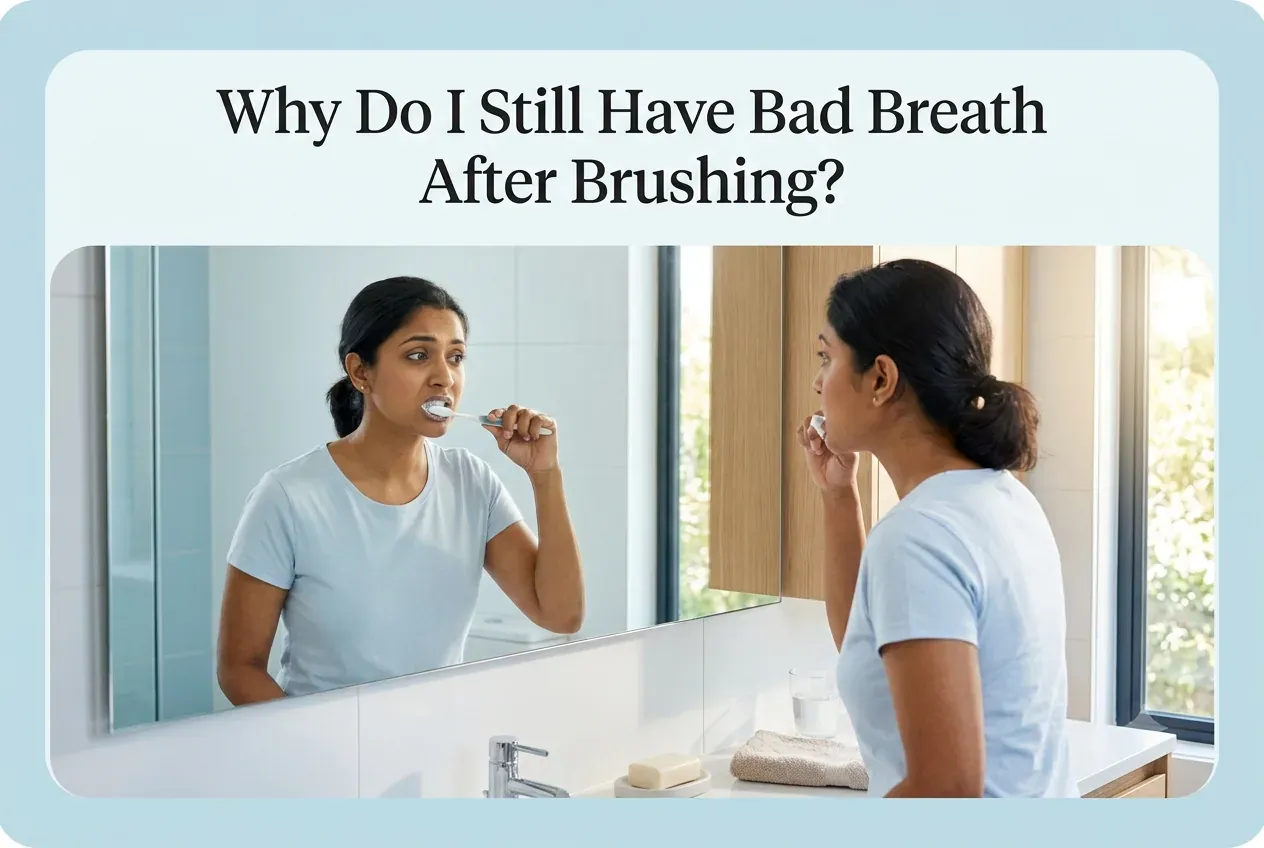
Why Do I Still Have Bad Breath After Brushing? 5 Hidden Causes
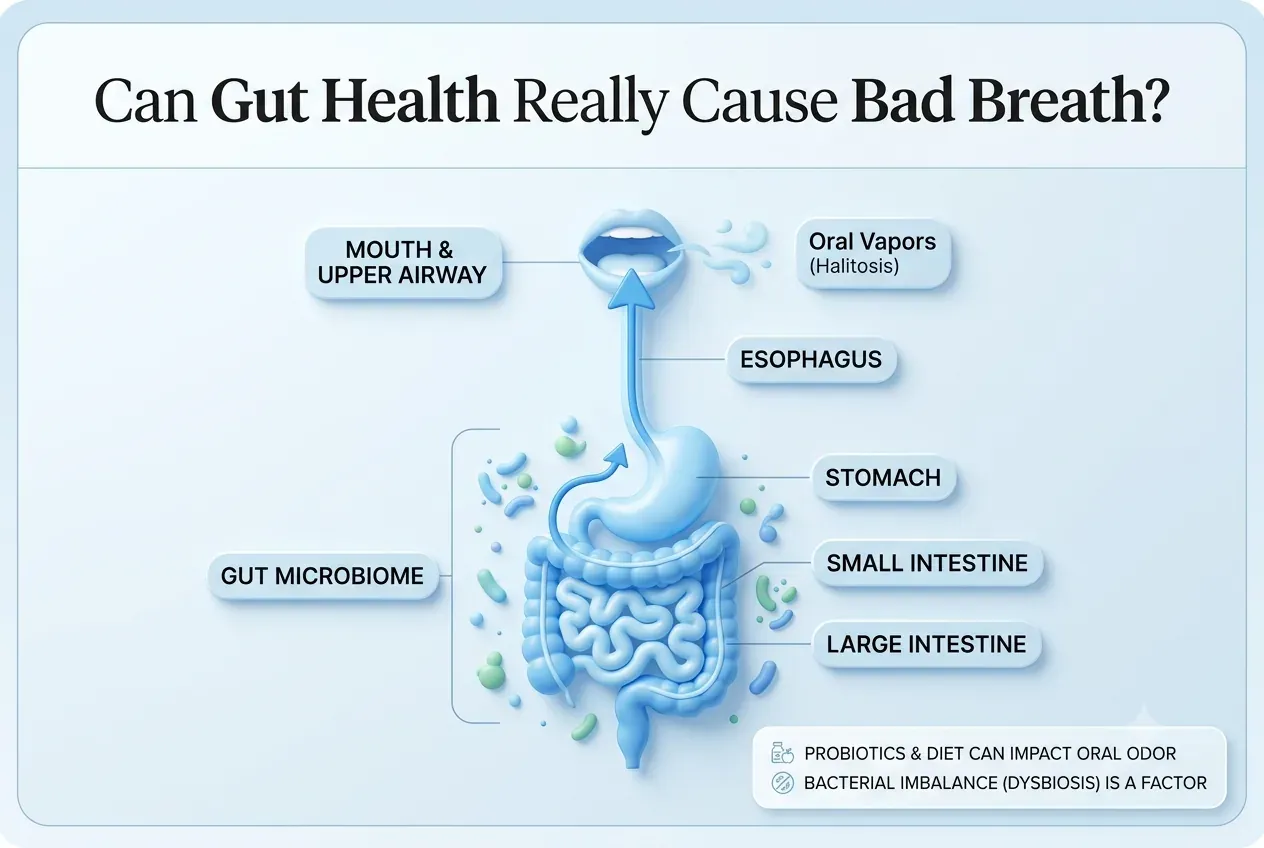
Can Gut Health Really Cause Bad Breath? What the Science Says
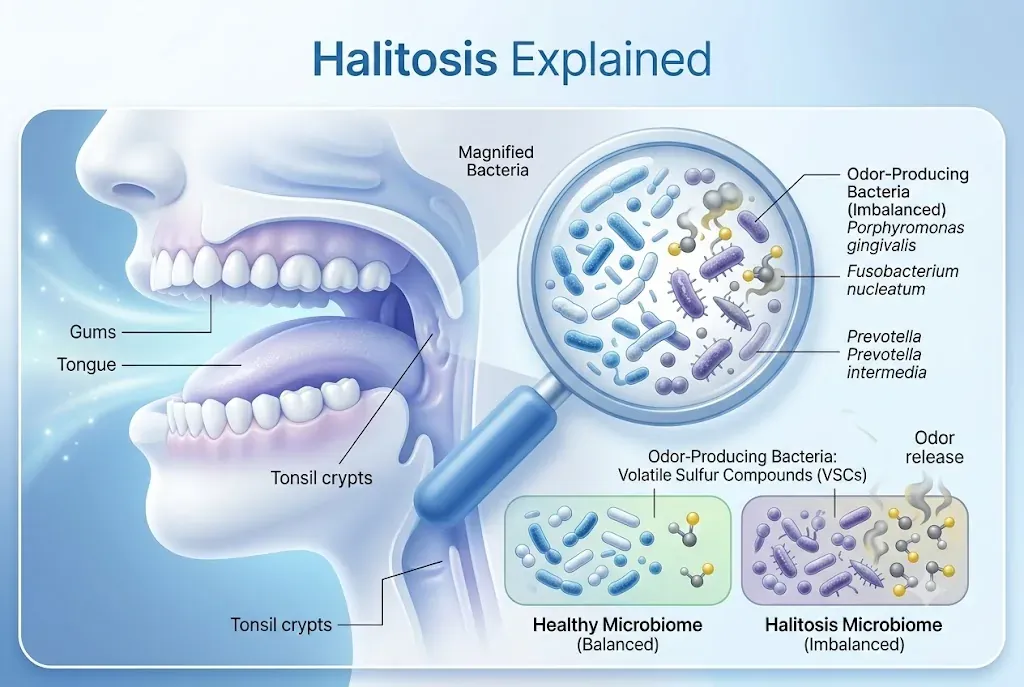
Halitosis Explained: The Real Root Causes of Chronic Bad Breath

White or Coated Tongue: What It Means and How to Fix It